Predictive & Prescriptive Maintenance
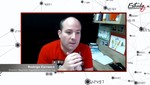
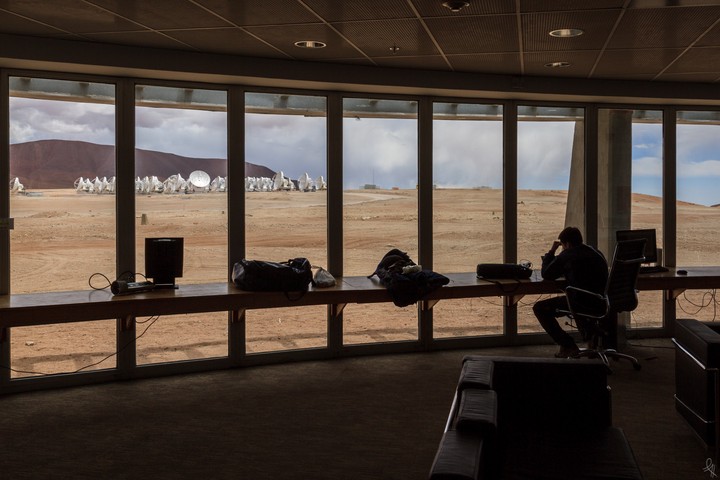 Operations office at 5,200 masl at the ALMA Observatory. © Rodrigo A. Carrasco
The evolution of industrial systems requires moving beyond merely predicting failures to actively orchestrating interventions. Our research bridges the gap between predictive analytics (estimating when a failure might occur) and prescriptive analytics (deciding exactly what to do about it under real-world constraints).
In a highly complex operational environment, knowing that a machine will fail is insufficient if the maintenance plan cannot accommodate the intervention. Our lab develops end-to-end decision support tools that connect these two layers.
Predictive Analytics: Anticipating Degradation and Anomalies
We design and deploy advanced machine learning models to monitor operational environments, process complex signals, and detect faults before they disrupt critical systems.
- System Log Anomaly Detection: We develop tools for continuous anomaly detection in massive system logs to support operational monitoring at the Paranal Observatory.
- Degradation and Remaining Useful Life: We implement frameworks to identify slow degradation faults and estimate remaining useful life within harsh environments, allowing for early intervention at the ALMA Radiotelescope.
Prescriptive Analytics: From Data to Decisions
To translate predictions into actionable strategies, we build combinatorial and stochastic optimization models that generate robust maintenance schedules.
- Optimization Under Uncertainty: We incorporate post-prognostic information and uncertainty metrics directly into our models to build true prescriptive maintenance systems that dictate the optimal time for intervention.
- Large-Scale Maintenance Planning: We tackle resource-aware scheduling limitations to optimize long-term maintenance planning for fleets. Our models explicitly address strict safety requirements, regulatory constraints, and fleet availability targets, as demonstrated in our collaborative work with LATAM Airlines.
Funding and Support
This continuous line of research is supported by the following grants:
- FIE-2016-V022
- 16IFI6626 CORFO
- FONDECYT 1231245
- FONDEF IT2410031

Rodrigo A. Carrasco
Associate Professor & Director of Data and Computing

Gonzalo Ruz
Universidad Adolfo Ibáñez

Andrés Catlán
Ph.D. Student, Industrial Engineering and Operations Research

Javier I. Torres
Ph.D. Student, Engineering Sciences

Anthony D. Cho Lo
Ph.D. in Industrial Engineering and Operations Research
My research interests are in machine learning, operation research, and image processing. I’m currently working in applications related to diagnostic and pattern detection related to astronomy instrument and maintenance management.
José Luis Ortiz
ALMA Observatory

Benjamín Bastidas
Research Engineer

Camila Marcuello
Research Engineer / M.S. in Data Science

Constanza Lorca
Research Engineer
Publications
From logs to maintenance decisions: explainable transformer-based anomaly detection and subsystem prioritization at Paranal Observatory

Interpretable sentiment-aware transformer-based model for individual log anomaly detection in distributed systems using word-level explanations

A Fine-Tuned BERT-Based Model for Individual Log Anomaly Detection in Operational Monitoring at Paranal Observatory
A RUL Estimation System from Clustered Run-to-Failure Degradation Signals

Improving prescriptive maintenance by incorporating post-prognostic information through chance constraints
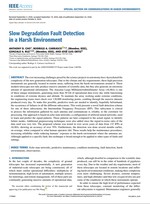
Slow Degradation Fault Detection in a Harsh Environment
ALMA engineering fault detection framework
Model-based fault detection and diagnosis in ALMA subsystems

Talks
Optimización matemática: conectando predicción y prescripción para mejores decisiones
National Engineering Day Web Seminar by Universidad Católica de Temuco

Makers Fair Vina 2020.

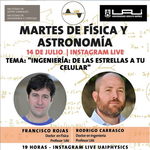
Martes de Física y Astronomía / Physics and Astronomy Tuesdays.
Viaje al Centro de los Datos / Voyage to the Center of Data.
OPTIMA 2019